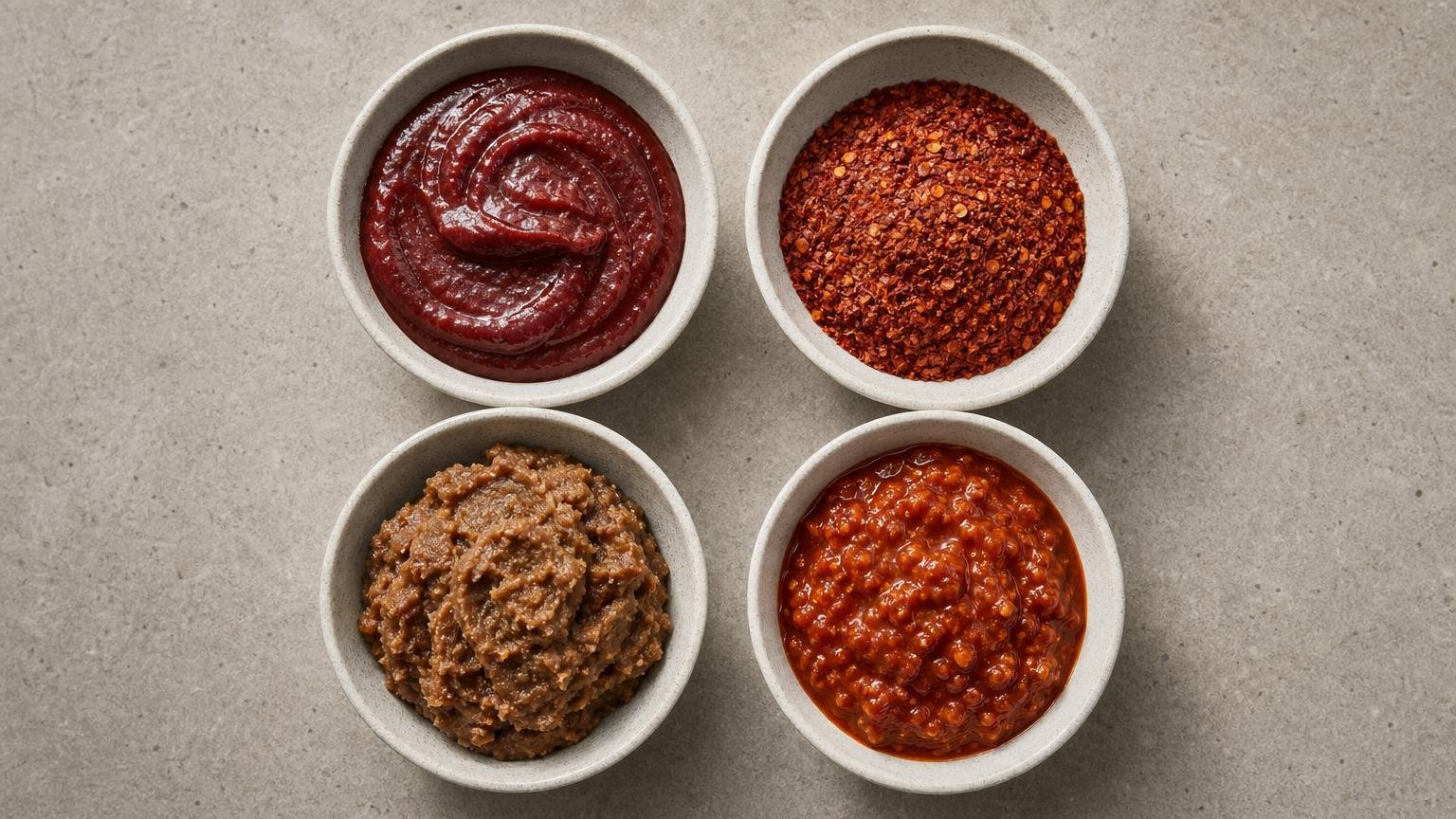
Gochujang is a fermented chili paste, gochugaru is ground dried pepper, doenjang is fermented soybean paste, and ssamjang is a seasoned dipping paste. Here is how to choose the right one.
Key Takeaways
- Gochugaru is ground dried red pepper, while gochujang is a thick fermented chili paste with additional ingredients.
- Doenjang is a fermented soybean paste used in dishes such as soups, stews and vegetable preparations.
- Ssamjang is a seasoned dipping paste commonly paired with grilled meat, raw vegetables and lettuce wraps.
- The four seasonings should not be substituted one-for-one because they differ in moisture, texture, seasoning and fermentation.
- Commercial formulations and allergens vary, so check the current product label.
Gochujang, gochugaru, doenjang and ssamjang often appear in the same Korean pantry, but they do different jobs. The simplest distinction is form and function: gochugaru is ground dried pepper, gochujang is a thick fermented chili paste, doenjang is a fermented soybean paste, and ssamjang is a seasoned paste commonly served with grilled meat, vegetables and lettuce wraps.
They are related, but they are not interchangeable. Choosing the right one depends on whether a dish needs dry pepper, a spicy paste, fermented soybean depth or a ready-to-eat dipping condiment.
The short answer
- Choose gochugaru when you need ground dried red pepper without turning the dish into a paste.
- Choose gochujang when you want a thick, spicy, savory and potentially sweet fermented chili paste for dishes such as bibimbap, spicy pork or tteokbokki.
- Choose doenjang when the dish calls for a salty, soybean-centered fermented paste, especially in soups, stews or vegetable dishes.
- Choose ssamjang when you want a seasoned dipping paste for grilled meat, raw vegetables or lettuce wraps.
What is gochugaru?
Gochugaru is ground dried red pepper. Unlike the other three seasonings, it is not a wet paste. That distinction matters because it can add pepper flavor and heat without bringing the water, salt, grains, soybean ingredients or sweeteners found in many prepared pastes.
The Korea Tourism Organization divides ground red pepper into three grind categories: coarse, medium and fine. It associates coarse pepper with kimchi, medium pepper with kimchi and general seasoning, and fine pepper with red-pepper paste or salads. It also identifies very spicy, medium and mild heat categories.
Gochugaru is also an ingredient used to make gochujang. A traditional demonstration from the Korea Tourism Organization combines it with grain starch, meju powder, malt, salt and liquid. The published quantities describe that particular demonstration rather than a universal formula, but they clearly show why gochugaru and gochujang are not two forms of the same finished product.
Use gochugaru when:
- You need dry ground pepper rather than a thick sauce.
- The recipe specifies a particular grind for kimchi, seasoning or paste-making.
- You want to control the other sources of salt, sweetness and moisture separately.
What is gochujang?
Gochujang is a thick fermented or ripened red-pepper paste made with pepper, salt and soybean or grain components. An older English translation of Korean food standards describes gochujang in those broad terms and specifies a minimum amount of powdered red pepper. Because that translation is not the current legal text, it is useful for understanding the category but should not be treated as current labeling guidance.
In practical cooking, gochujang contributes more than heat. Sempio describes its classic version as spicy, savory and sweet, with uses including stir-frying, dipping and marinades. Its ingredient list includes rice, water, syrup, salt, soybean-derived ingredients, wheat extract, garlic concentrate and a fermentation starter. Other brands can differ significantly in sweetness, heat, allergens and formulation.
The Korea Tourism Organization identifies bibimbap, spicy pork, tteokbokki and spicy seafood salads as examples of dishes using gochujang. It also places red-pepper paste in a wider range of soups, stews, grilled or fried foods, salads and noodles.
Use gochujang when:
- You need a thick fermented chili paste rather than dry pepper.
- The dish benefits from a combination of spice, savoriness and sweetness.
- You are preparing a gochujang-based dish such as bibimbap, spicy pork or tteokbokki.
What is doenjang?
Doenjang is fermented soybean paste, not chili paste. The older English food-standard translation defines the broader soybean-paste category around fermented soybeans and/or grains with salt. The Korea Tourism Organization lists doenjang as a seasoning for soups, stews, vegetable dishes and leaf wraps.
A relatively simple Sempio doenjang contains water, soybeans, salt, alcohol and a fermentation starter, with no red-pepper powder or added sweetener listed. That product illustrates doenjang’s soybean-centered composition, but it does not define every version. Other products may include grains, flavorings or additional ingredients, and their saltiness and fermentation character can vary.
Use doenjang when:
- You need fermented soybean flavor rather than chili heat.
- You are making a soybean-paste soup or stew.
- You want a salty fermented paste for vegetables or wraps.
What is ssamjang?
Ssamjang is a seasoned paste designed for convenient dipping and wrapping. Sempio’s version blends doenjang and gochujang with sesame and vegetables. The company positions it as a ready-to-eat accompaniment for grilled meat, raw vegetables and lettuce wraps containing rice.
That formulation is representative of one major commercial product, not a fixed rule for every ssamjang. Brands and homemade versions may use different ratios, aromatics or sweeteners, and some homemade preparations may not use commercial gochujang.
Use ssamjang when:
- You want a prepared dipping condiment for grilled meat.
- You are assembling lettuce wraps with rice.
- You want a seasoned paste for raw vegetables without building the mixture from separate pastes and seasonings.
Gochujang vs. gochugaru vs. doenjang: can you substitute them?
A direct one-for-one substitution is unlikely to give the same result because their composition and physical form differ.
- Gochugaru for gochujang: Ground dried pepper can supply pepper flavor and heat, but it does not provide the paste’s moisture, fermentation, salt, grain or soybean components. Many commercial gochujang products also contain sweeteners and other seasonings.
- Gochujang for gochugaru: The paste introduces moisture and can add salt, sweetness and fermented flavor that dry pepper does not. It will also change the dish’s texture.
- Doenjang for gochujang: Both are fermented pastes, but doenjang is soybean-centered and does not necessarily contain red pepper or added sweetener. It cannot reproduce gochujang’s chili profile.
- Ssamjang for doenjang or gochujang: Ssamjang may contain both, but it is already seasoned for dipping. Its sesame, vegetables and other flavorings can change a recipe built around an unseasoned base paste.
Which one should you buy first?
There is no single choice that fits every Korean dish. Start with the seasoning that matches what you plan to cook.
- For bibimbap, spicy pork or tteokbokki: Start with gochujang.
- For kimchi or recipes specifying dry Korean pepper: Start with gochugaru, checking the requested grind and heat level.
- For fermented soybean soups and stews: Start with doenjang.
- For grilled-meat lettuce wraps or a convenient vegetable dip: Start with ssamjang.
If you cook across several styles, gochugaru and gochujang still should not be treated as duplicates: one is a dry pepper ingredient, while the other is a complete fermented paste. Doenjang covers a separate soybean-paste role, and ssamjang offers a seasoned dipping option.
Check the label before buying
Commercial products can vary in heat, sweetness, saltiness, ingredients and allergens. For example, the cited Sempio gochujang contains wheat and soy, but that should not be generalized to every brand. Doenjang and ssamjang recipes also differ. Check the current package label and the linked official product page when ingredients or allergens matter.
What This Means
The practical difference is not simply mild versus spicy. Gochugaru is a dry pepper ingredient; gochujang is a fermented chili paste; doenjang is a fermented soybean paste; and ssamjang is a seasoned condiment intended especially for dipping and wraps. Buy according to the job the seasoning must perform, and avoid assuming that one can replace another in equal amounts.
Sources
- Korea Ministry of Food and Drug Safety — Standards and Specifications for Food Products: https://www.mfds.go.kr/files/upload/eng/Article_5._Standards_and_Spefications_for_Each_Food_Product.pdf
- Korea Tourism Organization — Ingredients of Korean Food: Seasonings: https://english1.visitkorea.or.kr/enu/FOD/FO_ENG_1_3.jsp
- Korea Tourism Organization — Jang: The Story Behind Sunchang’s Renowned Flavors: https://english.visitkorea.or.kr/svc/contents/contentsView.do?menuSn=904&vcontsId=221365
- Sempio — Ssamjang, Korean Soybean Dipping Paste: https://en.sempio.com/product/jangpaste/view/632
- Sempio — Gochujang, Hot Pepper Paste, Classic: https://en.sempio.com/product/jangpaste/view/622
- Sempio — Doenjang, Soybean Paste, Authentic: https://en.sempio.com/product/jangpaste/view/629
