The four Korean seasonings differ in heat, texture, concentration, and purpose. Here is how to choose the right jang for cooking, seasoning, or serving at the table.
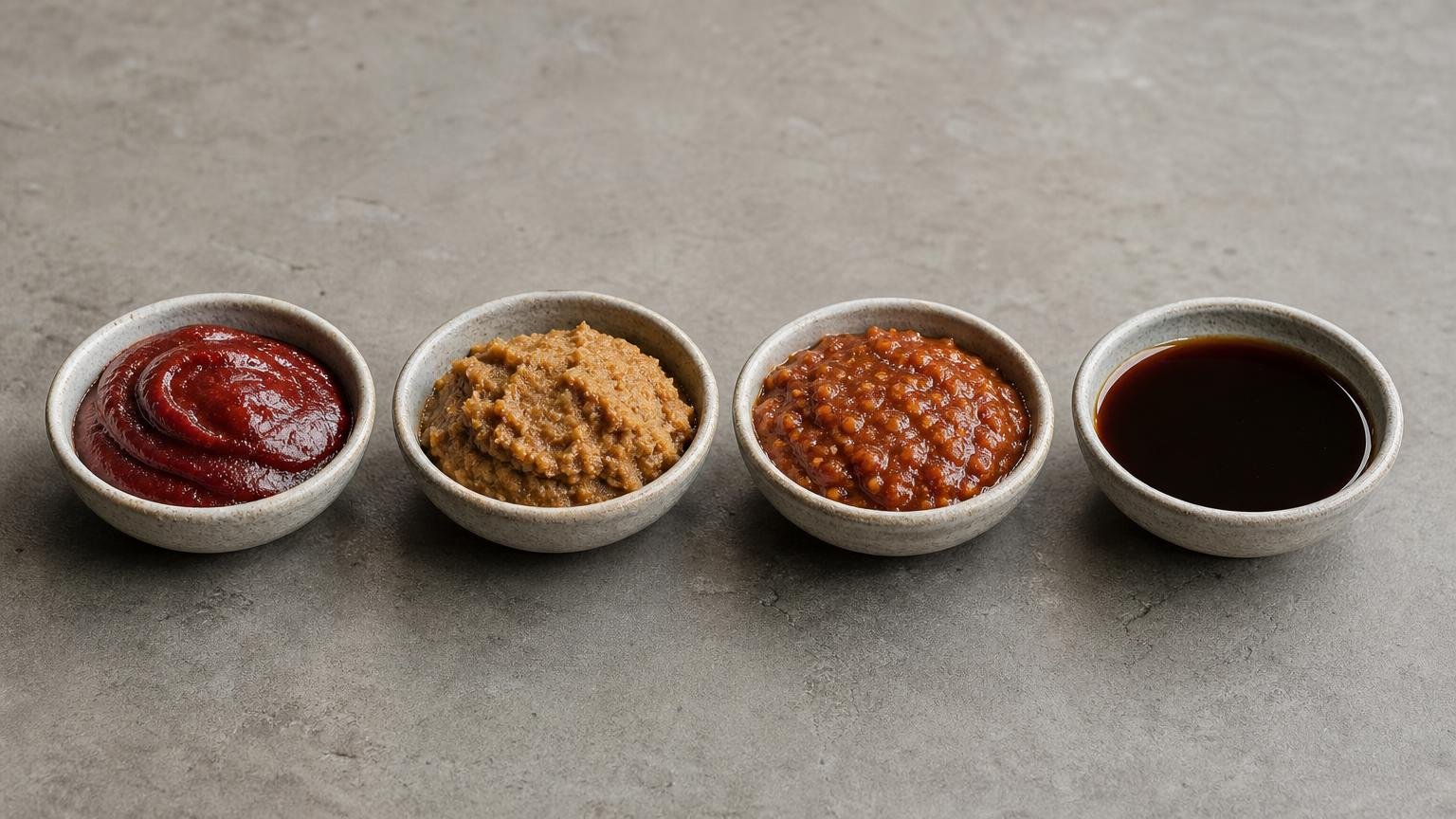
Key Takeaways
- Gochujang is a fermented chili paste with hot, savory, and potentially sweet and salty notes.
- Doenjang is a concentrated fermented soybean paste suited to soups, stews, marinades, and sauces.
- Ssamjang is generally a prepared condiment for grilled meat, vegetables, and lettuce-leaf wraps.
- Ganjang is a liquid fermented bean seasoning available in several types for different uses.
- The four jang are not direct one-for-one substitutes because their heat, texture, and seasoning balance differ.
Choosing among Korean jang becomes easier once you separate them by function. Gochujang brings fermented chili heat, doenjang delivers concentrated soybean depth, ssamjang is a prepared dipping paste, and ganjang is a liquid seasoning. They belong to the same broad family, but they are not one-for-one substitutes.
Jang refers to fermented sauces and pastes that form part of the foundation of the Korean diet. They can accompany vegetables, fish, and meat, and some jang practices have also been used in food preservation. In 2024, UNESCO added the knowledge, beliefs, and practices associated with jang making in the Republic of Korea to its Representative List of the Intangible Cultural Heritage of Humanity.
Gochujang vs doenjang vs ssamjang at a glance
- Use gochujang when you want a fermented red chili paste with heat, savoriness, and potentially sweet and salty notes.
- Use doenjang when a soup, stew, marinade, stir-fry, or dipping sauce needs robust fermented soybean flavor.
- Use ssamjang when you want a prepared condiment for grilled meat, fresh vegetables, or lettuce-leaf wraps.
- Use ganjang when you need liquid seasoning for a stew, marinade, or dressing.
What is gochujang?
Gochujang is a red or dark-red fermented paste defined by a hot, savory flavor that may also be sweet and salty. Its fermentation and paste-like consistency distinguish it from an ordinary chili sauce or generic hot sauce.
Choose gochujang when chili heat should be a central part of the seasoning rather than a background accent. Because sweetness, saltiness, and heat can vary by producer, taste the product before deciding how much to add.
Use gochujang when you need:
- Fermented chili flavor
- A thick red seasoning paste
- Heat combined with savory, and sometimes sweet or salty, notes
Gochujang should not automatically replace doenjang. Both are fermented pastes, but gochujang makes chili heat prominent, while doenjang centers the flavor of fermented soybeans.
What is doenjang?
Doenjang is a robust, umami-rich fermented soybean paste. It is used in soups and stews as well as marinades, stir-fries, wraps, and barbecue dipping sauces.
The traditional relationship between doenjang and ganjang helps explain their differences. Fermented soybean blocks called meju are placed in salt water. After fermentation, the liquid becomes ganjang, while the soybean solids become doenjang. This makes ganjang the liquid seasoning and doenjang the concentrated paste in the traditional process. Modern commercial products may use other production methods or additional ingredients.
Use doenjang when you need:
- Deep fermented soybean flavor
- A concentrated paste for a soup or stew
- A savory base for a marinade, stir-fry, or dipping sauce
Commercial doenjang formulas are not identical. One documented product, for example, includes soybean, salt, wheat flour, alcohol, and a koji starter, but that ingredient list should not be treated as universal. Check the package if allergens or specific ingredients matter to you.
What is ssamjang?
Ssamjang is generally a prepared dipping condiment rather than a basic cooking paste. A commercial version documented by Sempio combines doenjang, gochujang, sesame, and vegetables, producing a savory and sweet paste with mild heat.
Its intended uses include dipping fresh vegetables or grilled meat and adding it to lettuce-leaf ssam with rice. In practical terms, reach for ssamjang when the condiment is going directly onto food at the table and you want its seasoning already combined.
Use ssamjang when you need:
- A ready-to-eat dip for grilled meat or vegetables
- A seasoned paste for lettuce-leaf wraps
- A combination of soybean savoriness, mild chili heat, and additional flavorings
Ssamjang recipes vary considerably. Wheat, soy, sesame, sweeteners, and other ingredients may appear in some products without being present in every version. Read the label rather than assuming that all ssamjang has the same formula.
What is ganjang?
Ganjang is Korean soy sauce: a liquid seasoning made from fermented beans that adds savory flavor. Suggested uses include stews, meat marinades, and salad dressings.
Unlike doenjang, gochujang, and ssamjang, ganjang pours easily and can season a dish without adding the body of a paste. That makes it the most suitable of these four when the recipe or serving context specifically calls for a liquid soy seasoning.
However, ganjang is a category rather than one completely uniform product. Available types include general soy sauce, reduced-sodium soy sauce, seasoning soy sauce, and soy sauce intended for soup. Their cooking behavior and seasoning strength can differ, so check the product label and adjust according to the dish.
Use ganjang when you need:
- A liquid fermented bean seasoning
- Savory flavor in a stew, marinade, or dressing
- A soy sauce rather than a thick paste
Can you substitute one jang for another?
These condiments overlap in savory fermented character, but their textures and flavor profiles make direct substitutions unreliable.
- Gochujang for doenjang: This introduces prominent chili heat and potentially more sweetness, so it changes the dish rather than simply replacing soybean paste.
- Doenjang for gochujang: This adds concentrated soybean flavor but does not reproduce gochujang’s defining red chili character.
- Ssamjang for either paste: Ssamjang may already contain both, along with sesame, vegetables, or sweetening ingredients. It is therefore more seasoned and is usually better treated as a finished condiment.
- Ganjang for a paste: Ganjang supplies liquid seasoning but not the same body or concentrated paste texture.
If a recipe specifies a particular jang, using that type will most closely match its intended balance. If you must switch, account for the changes in heat, sweetness, saltiness, texture, and concentration rather than exchanging equal amounts automatically.
How to choose the right Korean jang
- For fermented chili heat: Choose gochujang.
- For concentrated soybean depth in cooking: Choose doenjang.
- For a prepared dip or lettuce-wrap condiment: Choose ssamjang.
- For liquid seasoning: Choose ganjang, then select the appropriate type for the dish.
There is no universal winner in the gochujang vs doenjang vs ssamjang comparison. The right choice depends on whether you need chili heat, concentrated soybean flavor, a ready-to-eat dip, or a pourable seasoning.
What This Means
Think of the four products by role: gochujang is the fermented chili paste, doenjang is the concentrated fermented soybean paste, ssamjang is the prepared dipping and wrapping condiment, and ganjang is the liquid soy seasoning. Keeping those roles distinct will help you choose more confidently and avoid substitutions that unexpectedly change a dish.
Because producers use different recipes and methods, heat, sweetness, saltiness, ingredients, and allergens may vary. Consult the package and the linked official product information when those details are important.
Sources
- UNESCO Intangible Cultural Heritage — Knowledge, beliefs and practices related to jang making in the Republic of Korea
- Codex Alimentarius Commission — Standard for Gochujang (CXS 294-2023)
- Korea.net — Making soybean paste becomes a national heritage item
- Sempio — Doenjang, Korean Soybean Paste
- Sempio — Ssamjang, Korean Soybean Dipping Paste
- Sempio — Soy Sauce
